Tuesday, 16 August 2011

What can change the nature of a man?


I realise I've not posted anything in a while, but I have good reason for that: I finally got round to playing Planescape: Torment, and it more or less took over my life for quite a while. As a huge fan of the Baldur's Gate series, I've long felt that I needed to play this game, and now that it's available on Good Old Games, I've been able to. And now I'm going to give you my thoughts on what, it has to be said, is one of the greatest RPGs ever made.

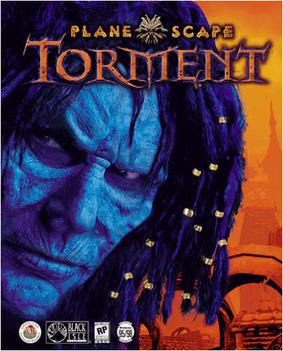
It's fair to say that it was a total commercial failure on its release. It's also fair to say that this was probably in large part due to its indescribably hideous box art, which, if it weren't for the North American box art of Ico, would probably qualify for the worst box art in history. And even then, it's a close thing. Doubtless part of its commercial failure is due to its weirdness and relative inaccessibility compared to other games of the time. There's little combat, and what little there is mostly isn't very good, and there's absolutely masses of very dense text, which would put a lot of people off the game. Compared to something like Baldur's Gate II, released a year later, it's quite difficult to get into. But the fact remains that the weirdness of its setting, its subverting of traditional RPG tropes, and its heavy emphasis on dialogue and story are what set it apart from other games of the time, and are what make it so memorable.

The first thing to understand is that the game is very strange. A lot of this is due to its use of the AD&D Planescape setting, which is far from your typical fantasy setting. This is one of the game's great strengths: it's that depressingly rare fantasy RPG that actually feels fantastic. It's not set in some muddy, Medieval, Tolkienesque kingdom, but in Sigil, a city that is essentially a crossroads for the entire multiverse. Walking down the street, you're more likely to meet a demon on leave from the eternal Blood War than an elf or a dwarf. Here, fiends and angels are a common fact of life, and succubi run brothels for the intellect. Pretty much anything can be a portal provided you have the right key, and these keys can be anything from an actual key, to making a certain gesture, to remembering what your first kiss was like. Streets can give birth, and belief is a force powerful enough to reshape the multiverse: if enough people believe in something, it can spontaneously come into being.

The story doesn't disappoint for weirdness either, but fully lives up to the potential provided by the setting. The game does all it can to avoid RPG cliches: instead of swords (of which there are only a couple in the whole game), you have equippable tattoos and earrings; instead of a party of heroic adventurers, you can recruit a floating skull whose main ability is insulting people (the first NPC you meet), a Scottish half-demon, a chaste succubus (who is also an agnostic priest), and a walking suit of armour animated by Justice; instead of saving the world, your goal is to solve the puzzle of the nature of the protagonist. Your journey will take you from the city of Sigil across the multiverse, to prisons which occupy entire Planes of existence, to Hell itself and back again. But now, back to the protagonist, for it is he that is the most remarkable and interesting thing about this game. And that's saying a lot.


The main character is the Nameless One, an amnesiac, horribly scarred immortal who has lived countless lives, and your goal is to learn who he is. It quickly becomes apparent that many of the people you meet know who you are, or rather, have known previous incarnations of you. They are not always pleased to see you. The Nameless One is a man who has lived countless lives and died countless deaths, but who always gets back up afterwards; this can be used to your advantage, and there are a few sections of the game where you need to die to proceed. This immortality doesn't make the game easier, but is basically identical in function to a quickload; it is essentially an investigation into the nature of death in RPGs. In most RPGs, when you die, you simply reload; in Torment, it's built into the game mechanics. The cheapness of death in RPGs is a core mechanic here, as well as a theme that is investigated in detail, and ultimately brutally deconstructed; the nature of the Nameless One's immortality is one of the big questions that drives the story. It's a rare game indeed that allows you to engage in philosophical debate on the nature of death, and it's an even rarer one that spends most of its story examining complex themes about life, death, and immortality. It's fair to say, I think, that the Nameless One is one of the most unique and fascinating characters in all fiction, and that's not something I say lightly.

There are flaws in the game, certainly; the sheer amount of text can be overwhelming, and the lack of combat relative to other games, as well as the fact that much of the combat is pretty dull, could definitely prevent people from getting into the game; and without fan-made patches and fixes, you're likely to run into quite a few bugs. But none of that should prevent you from playing Torment. If nothing else, play if for the uniqueness of the setting and characters; it's fair to say that there's no other RPG, before or since, that's quite like it. Yes, the graphics are dated, but the art design still looks great 12 years on, even if the colour palette is a little on the muddy side. And yes, you have to wade through enormous amounts of dialogue, but the dialogue is one of the game's best aspects. I could go on, but there's so much to talk about that I could be here all day. You can get this absolute gem of a game for less than $10 from Good Old Games, so if you like RPGs there's absolutely no reason not to play it. Read the dialogue, engage with the characters, learn about the Nameless One, and join the debate:

What can change the nature of a man?

Thursday, 7 July 2011

Hobbit photos

The first photos from the set of The Hobbit have been trickling onto the web, so I thought I'd share my opinions of them for those few who care. Predictably enough, from what little they've revealed so far, it's looking good.


First up, Martin Freeman as Bilbo. Costume design is nicely in keeping with the stuff Bilbo wore in the LotR films, but different enough that it's believable that a (comparatively) young character would wear it. Hell, Freeman even looks like a young Ian Holm. Very good choice for the character; so far, Bilbo's looking good.


The dwarves... I'm more hesitant about. They still look good, and it's nice that they appear to have decided to make each dwarf look very distinct; given how many of them there are, this will definitely be handy when it comes to keeping track of who's who. Now, I know The Hobbit is considerably more light-hearted than LotR, but I worry somewhat that the designs are a little, well, silly. Still, this is mostly just nit-picking. I'm still stupidly excited for this film.

Ok, fine. The dwarf on the left has hair that wouldn't look out of place in a Final Fantasy game. But other than that it looks good.

All pictures come from Empire Online.

Monday, 27 June 2011

Rotten Tomatoes: a monument to all your sins

I thought I'd do something different from my usual with this post. Rather than a review or a news post, I've decided to explain what I think about review aggregation site Rotten Tomatoes. You all know what it is, and almost certainly use it. I use it quite often, since it's a really helpful archive of reviews and makes finding an individual critic's opinion on a film much easier than it might be otherwise.

And I don't like it.

I'm well aware of how convenient it is to have all the reviews in one place, but on balance, I think Rotten Tomatoes is detrimental to the industry and unhelpful to consumers. You will have noticed that, in my reviews, I do not assign scores. This is because I don't believe a complicated opinion about a film can be adequately expressed by an arbitrary numerical value. I might think a film a failure, and yet interesting enough to watch anyway, like Sucker Punch (but more on that later); or I might think a film technically superb, but so dull that that I can't in good conscience recommend it, like Citizen Kane (on a narrative level: plodding, pretentious, glacially paced even for the time, and tremendously hypocritical on Orson Welles' part. On a technical level, however, one of the most important films ever made). How am I to rate these films? I can't. Not accurately, anyway. Now, I have no problem with other critics assigning scores, because if you don't have time to read the whole review it can be helpful to be able to quickly see their opinion. The problem with Rotten Tomatoes is that it aggregates these scores and gives you a percentage of critics who enjoyed the film. This is a serious problem, as most people view the Tomatometer as a simple indicator of how good a film is; the higher the percentage, the better the film.


Lex says it better than I ever could. At a glance, you can tell that this idea is critically flawed. The recent Star Trek reboot has a 94% rating on Rotten Tomatoes, which most people would take to mean that the film is excellent. It's not. It's certainly not bad, but it's nothing more or less than a competent space opera. There's nothing remarkable at all about it, no ambition, no commentary on the human condition which used to be Star Trek's hallmark. District 9 has a 91% rating; according to the Tomatometer, Star Trek is better than District 9. Again, refer to the picture above. District 9 is better directed, has better action, more interesting characters, and there's a purpose to the whole thing sorely lacking from Star Trek.

Let's now look at Sucker Punch in reference to Star Trek. I honestly don't know if I enjoyed this film or not. It's certainly not lacking for flaws: the plot is nearly incomprehensible at times, the characters are two-dimensional at best, and while the fight sequences are very, very good, the amount of slow-motion used is just ridiculous. And yet, in spite of all this, I can't convince myself it's a bad film. There's creativity here, ambition, the desire to be great, sorely lacking from Star Trek, and as a result, while it might be a technically inferior film, I would much rather watch Sucker Punch again, simply because it's interesting. To me, an ambitious film that doesn't quite come together is far preferable to one that sets low standards for itself and succeeds according to those standards. Sucker Punch has a 22% rating on the Tomatometer, and as a result, most people are going to pass it by, when, flaws or no, it really ought to be seen.

And whom do I blame for the unhelpfulness of the aggregate score? The consumer. The person who isn't interested in finding out why a film is good, but simply wants a binary yes/no answer to the question of whether or not they should go and see it. It is because of this that film criticism, as journalism in its own right, is dying. Film criticism is not mere consumer advice, but should be an interesting read on its own merits, picking apart the film and revealing things that you might have missed otherwise. It can be entertaining as a piece of writing, rather than just useful advice; go and read some of Roger Ebert's reviews of bad films. Many of them are hilarious, and considerably more entertaining than the film itself. People however, by and large, read film reviews as they would read a review for a vacuum cleaner: they simply want to know if it works or not. Rotten Tomatoes provides this. People assume that, if it has a high rating, it must be good, but as I hope to have demonstrated, this isn't necessarily true. Nor does it take into account films which might be guilty pleasures, such as G.I. Joe: by any reasonable standard, an awful film, but it's fun enough that it doesn't really matter.

So, I urge you, do not use the Tomatometer alone to judge if a film is good. Instead, go into the review archive, the thing Rotten Tomatoes does right, and read some actual reviews. Find a critic or two whose opinions you trust and agree with, and, when you're trying to decide whether to go and see a film, see what that critic thinks, not what the Tomatometer says.

Wednesday, 22 June 2011

13 Assassins

It's been a while, and I apologise for that, but I've had exams to deal with. Now, however, I'm free, and so shall hopefully be posting more often. In any case, this is exactly the kind of film I started this blog for: an obscure foreign film which not many will have heard of, but should absolutely see if they get a chance.

First off, this film, as might be expected from the fact that Takashi Miike directed it, isn't for the faint of heart. It's definitely earned its 18 rating, with an extremely violent and bloody final battle, as well as a prominently displayed quadruple amputee early in the film. If this sort of stuff doesn't bother you, and if, indeed, you enjoy tremendously violent battle sequences, you're in for a real treat here. The plot is very straightforward and fairly unremarkable, in all honesty. If you've seen any other men-on-a-mission film, you know what's going to happen here. The shogun's brother, Naritsugu, is a sadistic, psychopathic despot, and so one of his enemies hires a samurai to kill him. Said samurai recruits twelve other men, and they try to figure out how they're going to get their man.

Thirteen main characters is, it must be said, too many for a two-hour film. Only three or four of them get any real development, and you'll probably be hard pressed to even remember the names of most of them, let alone feel any particular sadness when they die. And no, that's not a spoiler, it's made clear very early in the film that this mission will probably lead to their deaths. Hell, the leader, Shinzaemon, wants to die on this mission, and earn an honourable death on the battlefield. There may be too many characters, but the actors playing them are generally very good. The thirteenth assassin, Koyata, reminds me a lot of Kikuchiyo from Seven Samurai, something I suspect may have been intentional, given how similar the plot of this film is to it.

Now that we've got that out of the way, we can discuss what most people are probably going to see this film for, and what will definitely be the most remembered aspect of it: the final battle. The assassins' plan to kill Naritsugu involves taking over a village and turning it into a deathtrap for his personal bodyguard. When Naritsugu arrives and the final confrontation begins, if you check your watch, you'll notice there's still about 45 minutes left of the film. The final battle lasts those 45 minutes. It possibly goes on a bit too long, but to be honest, I simply didn't care. This is one of the best battles I've seen in a film in quite some time. The various traps the assassins rig around the village keep the battle nice and varied, and some of the stuff that happens is so utterly mad that it would be a disservice to discuss it here; you need to see it for yourself. It's a completely deranged last 45 minutes, but it's so spectacular that it doesn't matter. A particular highlight is Hirayama, a ronin, taking on about 20 of Naritsugu's men all by himself.

Hollywood action film directors (Michael Bay in particular) would do well to watch this film and learn how you ought to film a battle sequence. It's as chaotic a battle as you're ever likely to see, but it's never difficult to tell what's happening, which is more than can be said for films which think extreme close-ups and shakycam are more important than a coherent scene. The shots are composed, and the camera is focused on people, such that it's never difficult to tell who is on which side; generally, the assassins are right in the centre of the shot, with the bodyguard surrounding them. Miike keeps the camera close enough to maintain the sense of chaos and being in the battle, but keeps it pulled back far enough that you can always see the action. As Batman Begins showed us, it doesn't matter how well-choreographed your fight scene is if the camera is so close to it that you can't see what's happening; this is never a problem for 13 Assassins; the battle is chaotic, absolutely, but it's never unclear what's happening.

If you like Japanese cinema and chambara films in particular, you owe it to yourself to see this film if you get a chance. The plot is pretty unremarkable, but the final battle sequence is one of the best I've seen in a long time. If you like action films at all, this is a must-see.

NB: there were supposed to be pictures, but Blogger's being irritating and won't attach them.

Monday, 16 May 2011

Monsters 2?

Really? Monsters was a really great film (see my review), but is a sequel really necessary? Ok, it seems to suggest that it'll be another story set in the same universe rather than a direct follow-up to the original, but it still seems odd to me. I know the critics loved it, but did Monsters really make enough money to justify a sequel? When I went to see it, there were all of about six people in the screen. A lot of the charm of the original was the shoestring budget, and a sequel will doubtless have significantly more money on hand, so it almost certainly won't be as impressive effects-wise. I won't condemn this one just yet, but it seems remarkably unnecessary, even by the standards usually set by sequels.

Also, I really dislike the news that there will be a lot more of the creatures in the sequel. Half of what made them interesting was that, up until the finale, they were only glimpsed, saving the big reveal for almost the final shot of the film. Putting more of them in the film will probably do for their appeal what flooding the Star Wars prequels with Jedi did for their mystique in the original films.

Source: Empire.

Tuesday, 19 April 2011

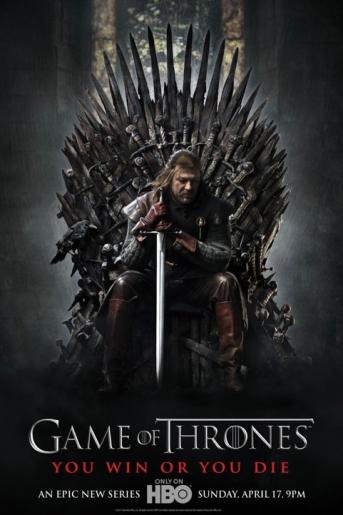
Game of Thrones

I watched the first episode last night, and I have to say, I was very impressed. It didn't have many big, dramatic moments, apart from the beginning and end, but given that it's going to take a little while to establish the characters and the world, I think that's a good thing. It's best to let us get to know the characters before the horrible things that happen in the books begin. The acting was very good, and the set and costume design makes it very obvious how much HBO has spent on this series.

Among the cast, of particular note, I thought, were Maisie Williams as Arya, who seems to have perfectly captured the impish, tomboyish nature of the character. Kit Harrington as Jon has a pleasing level of detachment and resentment on account of being the bastard, and the fantastically named Nikolaj Coster-Waldau is both suitably attractive and arrogant as Jaime. Predictably, Sean Bean has the honourability of Eddard sorted out, and Emilia Clarke seems good so far as Daenerys. She certainly was believable as the little girl lost in the world, being used as a pawn by her brother; it'll be interesting to see how she handles the transition to ULTIMATE BADASSERY that the character undergoes. And it would be remiss of me not to mention Peter Dinklage as the bitter dwarf Tyrion, who has taken one of the novels' most interesting characters and looks set to make his screen incarnation just as memorable. If it seems like I've singled out half the cast, well, what can I say? It's a damn fine cast.

As I said, the money HBO's spent is clearly on display throughout. What visual effects there are, are well done; with the exception of a rather obvious matte painting in the crypts beneath Winterfell, which was a bit of a shame. I'm pleased to say that, even when things differ significantly from how I pictured them, they still work. In particular, the armour of the Kingsguard looks little like how I imagined it, but still looks like it belongs in this world. As far as set design goes, I liked the difference in colour palettes used between Winterfell and Pentos; in the former, the colours are largely shades of grey, fairly understated and washed-out, reflecting the Stark words, "Winter is coming", and the resignation and dedication to duty implied therein. By contrast, the Free City of Pentos is bright and vivid, an indication of how much livelier life is over there. For me, at least, given that Daenerys is my favourite character in the series, I like to think of the bright colours as representative of her vitality and dynamism, though it may not yet be on show in the first episode.

All in all, a very strong premiere which bodes well for the rest of the series. Time will tell, but I may well have a new favourite TV show. Which makes it all the more pleasing that it's already been renewed for a second season.

Sunday, 10 April 2011

Winter is Coming

HBO have released the first fifteen minutes of Game of Thrones as a preview of the series. It's looking very, very good. The Others, fortunately, as they would have been quite easy to get wrong, seem to be as underwear-soilingly terrifying as they are in the books. Admittedly she had very little screentime, but Maisie Williams (Arya) in particular looks like she's embodied the character very well. Looking forward to seeing more of her when the series starts. If I'm going to be critical, I have to say that I would have loved to see something of Daenerys, but I guess I'll just have to wait.

Just over a week to go...

Friday, 4 March 2011

Fire and Blood

After yesterday's terrible news, it appears karma is working in full force to balance things out, as it turns out that, at long last, A Dance with Dragons has a release date. This book has been in the making for nearly six years, so to say it's highly-anticipated would be a gross understatement. However, GRRM's reassured us that it's really bloody long, and if the events at the end of A Feast for Crows are any indication, this book should be something truly spectacular.

Winter is coming. And so are the dragons.


Update: it gets better. HBO have released a new trailer for Game of Thrones. We're getting a TV series based on the first novel in the series, and the latest novel in the series, within a few months of each other. Excited? I am.


Valar morghulis.

Thursday, 3 March 2011

Is nothing sacred?

Basically, they're planning to make sequels and prequels to Blade Runner. Excuse me a moment.


This is a travesty. Blade Runner is one of the greatest science fiction films ever made, and they're planning to make a *shudder* franchise out of it. If this happens, brace yourself for a very long rant on this here blog. I may also need to "retire" the people involved in destroying this stunning work of art.

Monday, 28 February 2011

Oscars 2011 and Superman

As most of you will know, the Oscars were last night, and there were very few surprises. The King's Speech took home Best Picture, Actor, Original Screenplay, and Director. I think everyone saw the first two coming; it's a bit of a surprise that Director didn't go to David Fincher for The Social Network, but it should have been Christoher Nolan's award anyway, so who cares. Toy Story 3 won Best Animated Feature, because, let's be honest, it's not called the Pixar Award for nothing. Inception, happily, did rather well, winning as many awards as Speech, albeit in the technical categories: Cinematography, Visual Effects, Sound Mixing, and Sound Editing. I suppose science fiction has to be happy with what it can get, which tends to be the technical awards. Sigh.

In light of there being almost nothing interesting to talk about with regards to the Oscars, let's talk about a rumour that I desperately want to be true. Apparently, Zack Snyder wants Viggo Mortensen to be General Zod in the upcoming Superman reboot, working title The Man of Steel. That's right. Aragorn could be Zod. Granted, this is very much a rumour at this stage, with nothing whatsoever to suggest it'll actually happen, not least that, in the past, it has been denied that Zod would be the villain. However, Snyder supposedly wants Mortensen for the role, and I think he'd be very good in it. While he tends not play out-and-out villains, he was excellent when playing morally grey, at best, characters in A History of Violence (which was also a comic book adaptation) and Eastern Promises. Obviously, the fact that they've said Zod won't be the villain is a problem, but I'm not sure who else it could be. Other than Zod, the only obvious choice is Lex Luthor, but he was the villain in three of the last five Superman films, four if you count Superman II. As I said, this is pure rumour at this stage, but it's still interesting to talk about.

Come on, Aragorn could be General Zod! Who doesn't want that?